The nEXT step
The nEXT step in compact maglev turbomolecular pump deployment
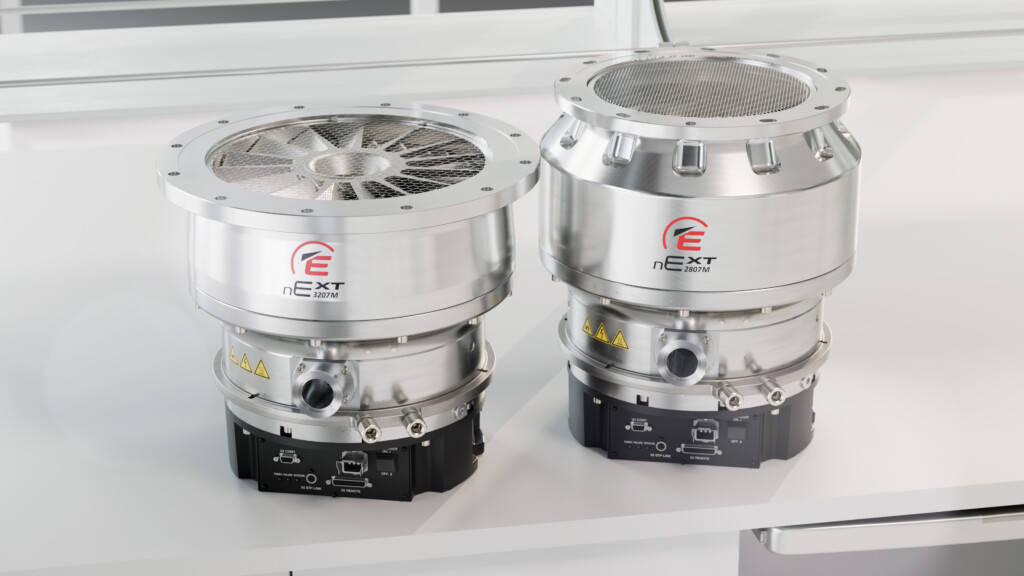
Working principles of maglev turbo technology
Mag turbo pumps operate using a two-stage principle in conjunction with a primary pump to achieve desired vacuum levels:
Turbo Stage: Static ‘stator’ blades are positioned between the moving ‘rotor’ blades, which rotate at extremely high speeds. This rotation impacts gas molecules, creating momentum and directing particles from the inlet to the exhaust.
Compression Stage: As gas molecules pass through successive stages of the blades, they become increasingly compressed and are finally expelled through the exhaust.
In magnetically levitated turbo pumps the rotor blades are held in position by precisely deployed electromagnets, eliminating the need for mechanical bearing systems.
How mag turbo pumps differ from mechanical turbomolecular pumps
Mag turbo pumps, sometimes referred to as Maglev pumps, have a number of features that make them well suited to specific applications:
- Compact and Lightweight: One of the most compact maglev pumps in their class, ideal for space-constrained applications
- Mountable in any orientation: Additional flexibility by having the choice to deploy your pump at multiple angles from your chamber
- Minimal Noise and Vibration: Ensures a quieter and smoother operation
- Cleaner Performance: Delivers contaminant-free vacuum making them well suited for sensitive operations
- Range of Pumping Speeds: Available up to 3200 l/s
- Reduced Maintenance: Less frequent maintenance intervals due to reduced wear-and-tear
